Author: Nectar Gan

Trump has the ability to thwart China’s economic reform initiatives.

Trump has the ability to thwart China’s economic reform initiatives.

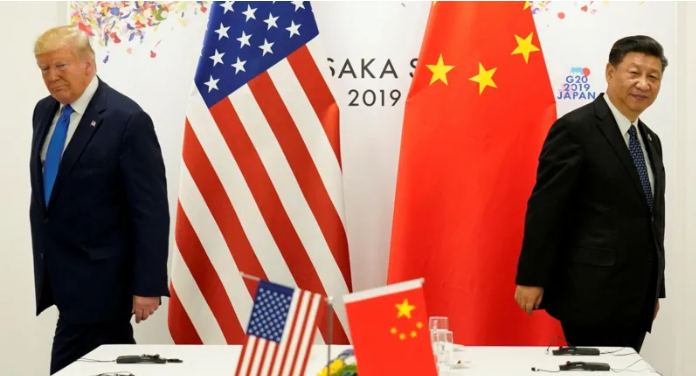
China has unveiled new measures aimed at boosting its flagging economy, as it braces for a second Donald Trump presidency. The country plans to tackle tens of billions of dollars of local government debt to prevent it being a drag on growth. Trump won the US election on a platform that promised steep import taxes, including tariffs as high as 60% on Chinese-made goods. His victory is now likely to hinder Xi Jinping’s plans to transform the country into a technology powerhouse – and further strain relations between the world’s two biggest economies. A property slump, rising government debt and unemployment, and low consumption have slowed down Chinese growth since the pandemic. So the stakes are higher than ever for the latest announcement from the Standing Committee of the
China is preparing for new economic, tech, and Taiwan-related disputes with Trump.

China is preparing for new economic, tech, and Taiwan-related disputes with Trump.

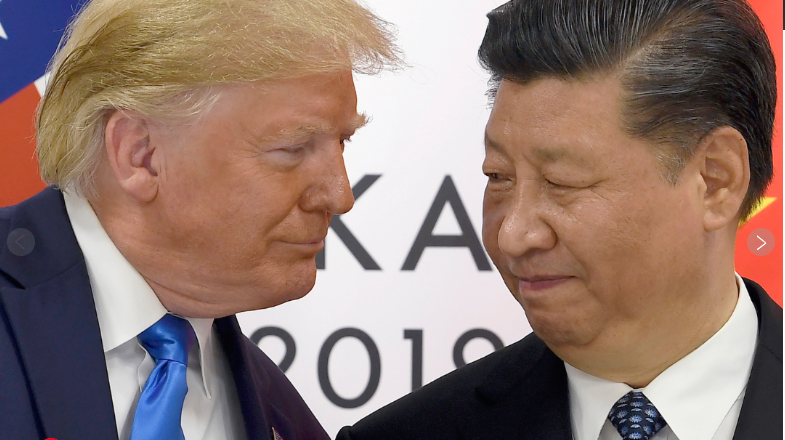
The first time China faced Donald Trump in the White House, there was a trade war, a breach of protocol involving Taiwan’s former leader, and a president-to-president bromance that turned sour. As President-elect Trump prepares to start his second term in office, China is bracing for unpredictability in its ties with the United States and renewed tensions over trade, technology and Taiwan. A new tariff war looms Perhaps the biggest consequence for China — if Trump stays true to his campaign promises — is his threat to slap blanket 60% tariffs on all Chinese exports to the U.S. Tariffs like that would be a blow to China’s already unstable economy, which is suffering from high youth unemployment, a lengthy property slump and government debt. A 60% duty o
China shreds Indonesia’s goodwill a day after Xi’s representative visits Jakarta

China shreds Indonesia’s goodwill a day after Xi’s representative visits Jakarta

A day after Chinese President Xi Jinping sent his special representative and Vice President Han Zheng to Jakarta to attend inauguration of President Prabowo Subianto, tension flared up between the two countries after a Chinese Coast Guard vessel twice in three days last week tried to disrupt a seismic data survey being conducted by an Indonesian energy company in the country’s exclusive economic zone in the North Nauna Sea. Like Malaysia, the Philippines, Vietnam, Brunei and Taiwan, Indonesia does not have any territorial dispute with China over the South China Sea. Despite this, Chinese ships have regularly entered its exclusive economic zone in the North Natuna Sea as Beijing claims it falls within its so-called U-shaped nine-dash line that includes 90% of the South China Sea.
Experts say the India-China thaw is motivated by economic and security objectives and is a “good restart.”

Experts say the India-China thaw is motivated by economic and security objectives and is a “good restart.”

India and China have agreed to ease border restrictions with resumed patrols, a move experts say is driven as much by economic imperatives as by security concerns, with both nations looking to bolster trade ties. The Indian government announced on Monday that the two nations would restart patrols in the contested region, where tensions have simmered since the Galwan Valley clash in 2020. China’s Ministry of Foreign Affairs spokesman Lin Jian confirmed the development, stating that Beijing would work with New Delhi to implement the agreement. Experts view the move as a positive step towards stabilising bilateral relations after years of fraught tensions. Saheli Chattaraj, assistant professor of Chinese studies at Somaiya Vidyavihar University, said India remained cautiously opt
China’s Taiwan reunification goal: More rhetoric less reality

China’s Taiwan reunification goal: More rhetoric less reality

For China, it would be the worst moment in its modern history. It is economically declining, while it is battling growing negative sentiments against it in several countries because of its expansionist designs and use of unfair means to fulfil its political, economic, and strategic agenda. In the midst of such developments, on October 13, Taiwan reported detecting a Chinese aircraft carrier group, Liaoning sailing to the island’s south on October 13, with the People’s Liberation Army of China putting out a video saying it was “preparing for battle.” It took place just three-day after Taiwanese President Lai Ching-te, in a rare but bold move, questioned Beijing’s sovereignty claims on the self-governing island, during his speech on the island’s National Day on October 10. Lai

The scale of China’s anti-corruption campaign: Some recent examples

China’s top anti-corruption agency has said that former Justice Minister Tang Yijun would be indicted on charges of corruption and misconduct after being accused of taking bribes and abused his power. The Central Commission for Discipline Inspection (CCDI) has accused Tang of helping family members secure financial deals and accepting lavish gifts and travel expenses, in violation of the Communist Party’s code of conduct. While Tang’s case, like so many others shows continuance of the anti-corruption campaign by Xi Jinping, a new dimension has been recently added relating to ‘corruption of the mind’ and disloyalty to the Communist Party of China (CPC) by reading publications with “serious political problems”. This has become an increasingly common accusation levelled at disg
US lawmaker, scholars call out Chinese communist regime’s propaganda books used by American universities

US lawmaker, scholars call out Chinese communist regime’s propaganda books used by American universities

Concerns have grown in recent years over the use of propaganda materials from the Chinese Communist Party (CCP) in American universities.  These materials, including books and educational resources that reflect the CCP’s political agenda, are often integrated into Chinese language and cultural programmes.  Critics argue that these materials serve as a vehicle for spreading Chinese government propaganda and soft power within US academic institutions.The presence of CCP-backed content in American universities raises questions about academic freedom, transparency, and the long-term impact on students' perceptions of China.  This trend is part of a broader strategy by the Chinese regime to influence global public opinion and promote its political narrative thr
Chinese interference in India’s internal matters and dislike for Tibetan culture

Chinese interference in India’s internal matters and dislike for Tibetan culture

Beijing’s opposition to naming a mountain peak in India’s Arunachal Pradesh in honour of the 6th Dalai Lama reflects Chinese aversion to Tibetan culture as well as its interference in the internal matters of the sovereign nation of India. Moreover, the Chinese objection can derail the ongoing talks with India on the border row. A team of mountaineers from India’s National Institute of Mountaineering and Allied Sports (NIMAS) scaled an unnamed and unclimbed 20,942 feet high peak in the Tawang region of Arunachal Pradesh, a far eastern province of India, which borders China. The institute named the peak after the 6th Dalai Lama Tsangyang Gyatso, born in 1682 in the region. China, however, did not like it. Chinese Foreign Ministry Spokesperson Lin Jian called it “illegal, and null
Sinking of China’s latest nuclear-powered attack submarine sets back its maritime ambitions

Sinking of China’s latest nuclear-powered attack submarine sets back its maritime ambitions

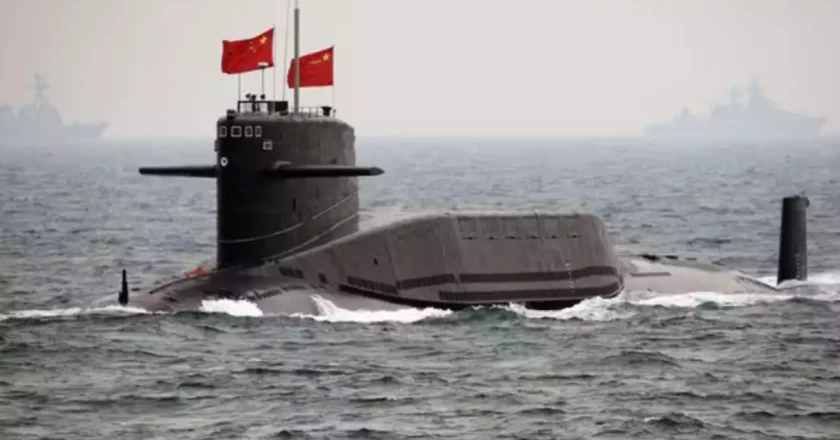
China’s naval ambitions, particularly under the leadership of the Chinese Communist Party (CCP), have centred on building a formidable maritime force to flex muscle across the Indo-Pacific region.  The recent sinking of China’s newest nuclear-powered attack submarine, however, came as a significant setback to this vision.  This incident not only highlights operational vulnerabilities but also underscores the broader challenges the CCP faces in achieving its priority goal of military modernization and dominance in the maritime domain. Earlier this week, satellite imagery showed China’s newest nuclear-powered attack submarine sank alongside a pier while under construction, the Associated Press (AP) reported, quoting a senior US defence official.According to the report
China’s aggression threatens global stability

China’s aggression threatens global stability

The Chinese Communist Party (CCP) poses a growing threat to global democracy, national sovereignty, and international stability. While much of the world's attention is currently focused on Russia’s aggression in Ukraine, it is crucial not to overlook the broader geopolitical danger that the CCP represents. The Chinese government’s ambitions extend far beyond regional influence; its ultimate goal is to reshape the global order in its favor, challenging the foundations of democracy, freedom, and economic independence. NATO, primarily tasked with defending Europe from Russian aggression, must broaden its scope to recognize the Chinese threat as a top priority. For decades, the CCP has worked quietly yet aggressively to expand its influence globally, using economic, technological, and
×