China

China in the crossfire: Calculated moves amid the US-Iran showdown

China in the crossfire: Calculated moves amid the US-Iran showdown

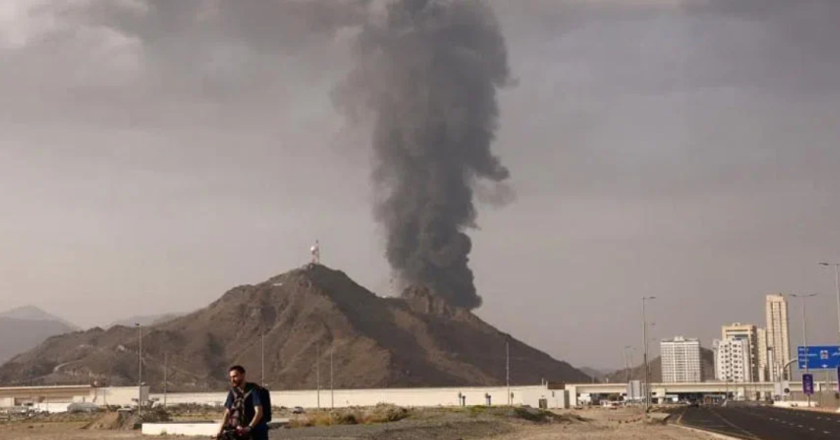
The launch of large-scale US and Israeli strikes against Iran starting on February 28 — framed by President Donald Trump’s objectives of degrading Tehran’s military capabilities and potentially precipitating regime change — places Beijing in a strategically uncomfortable position. This campaign is the most significant US military operation since the Iraq War, unfolding across a region central to China’s energy security and commercial ambitions. China formally opposes regime change and externally engineered political transitions as a matter of doctrine, viewing them as contrary to principles it treats as protective of both Iranian sovereignty and its own domestic and territorial sensitivities. That doctrinal stance shaped Beijing’s early response, as it joined Moscow in&nb
The Eerily Familiar Game Behind China’s Silence On Iran

The Eerily Familiar Game Behind China’s Silence On Iran

What looks like a setback for Beijing in West Asia might actually be more leverage - a chance to build long-term capital without firing a single shot. The present crisis in Iran - set in motion by the joint US-Israeli strikes of February 28 that killed Supreme Leader Ali Khamenei and decapitated key nodes of Iran's leadership - marks yet another inflexion point in the churn of West Asian geopolitics. For China, this is undeniably a setback. But it is neither terminal nor transformative in the way some might prematurely suggest. Rather, it is a reminder of the structural limits of Beijing's ambitions in a region still profoundly shaped by American hard power. Beijing's reaction has been swift, if predictable. Denouncing the strikes as "unacceptable" and violative of internation...
Beijing Doesn’t Think Like Washington—and the Iran Conflict Shows Why

Beijing Doesn’t Think Like Washington—and the Iran Conflict Shows Why

Arguing that Chinese policy is hung on alliances—with imputations of obligation—misses the point.  In the wake of the coordinated U.S. and Israeli attacks on Iran and the U.S. seizure of Nicolás Maduro from Caracas, many in the American strategic class express surprise that Beijing does not ride to the rescue of its strategic partners. A former U.S. ambassador to China (and my former boss) Nicholas Burns puts this point especially bluntly: “China,” he concludes, “is proving to be a feckless friend for its authoritarian allies.” But China’s standoffish posture is not, in fact, a surprise. Simply put, avoiding binding security commitments to peripheral third countries is not a sign of weakness but is by strategic design. It is patently obvious that regimes such as Aya
China removes nine military officials ahead of key political meeting

China removes nine military officials ahead of key political meeting

China has removed 19 officials, including nine from the military, from its list of lawmakers ahead of its biggest annual political meeting next week. The removals were announced by the country's top legislative body, the National People's Congress (NPC) Standing Committee. No official reason for the removal has been given, but it comes just weeks after President Xi Jinping removed Zhang Youxia, his highest-ranking general and also one of his closest military allies, from his role. Since coming to power, Xi has launched waves of anti-corruption drives, calling corruption "the biggest threat" to the Communist Party. However, some critics say it has been used as a tool to purge political rivals. According to a report by state media outlets, those removed include Li Qiaoming, ...
Merz heads to Beijing under pressure to toughen tone on China

Merz heads to Beijing under pressure to toughen tone on China

German Chancellor Friedrich Merz is arriving in Beijing early on Wednesday to meet his Chinese counterpart Xi Jinping, marking his first visit to China since taking office in 2025. Before taking off, Merz stressed the need for fair trade, but also said that China “has risen to the ranks of the great powers, our China policy must take this into account” and that “Beijing’s voice is also heard in Moscow.” China is Germany’s top trading partner. Yet diplomats in Berlin hope Merz will strike a firmer tone, in line with the government’s China strategy, which aims to reduce economic dependence on the world’s second-largest economy. “Chancellor Merz must not sugarcoat anything in Beijing”, Boris Mijatovic, member of the Bundestag’s committee on foreign affairs, told Eura
EU walks trade tightrope with China as concerns over Russia links grow

EU walks trade tightrope with China as concerns over Russia links grow

Europe is “not naive” about Beijing’s alignment with Moscow, but is trying to “buy ourselves a little bit more time to remilitarize,” analyst Ivana Karásková has said, as EU leaders keep economic channels with China open despite growing security concerns. Karásková, China team lead at the Association for International Affairs in Prague, told TVP World’s On the Record program that Europe is attempting to manage a volatile triangle between the EU, China and a less predictable United States while Russia’s war against Ukraine grinds on.  Karásková argued that, for Russia, the “ideal outcome is complete disruption of the European Union” and NATO, while China’s objectives are different: it wants access to EU markets and prefers to deal with a functioning bloc even as it seeks to
How Europe can resolve its Trump-China dilemma

How Europe can resolve its Trump-China dilemma

Europe faces a dilemma in its engagement with China. While closer relations with Beijing could reduce European dependence on the US, it would also risk provoking a harsh response from Washington. Gesine Weber and Zeno Leoni argue that Europe can overcome this challenge if it embraces its role as a middle power. German Chancellor Friedrich Merz is making an official visit to China on 25–26 February. His trip follows similar visits by French President Emmanuel Macron in December and Canada’s Prime Minister Mark Carney and UK Prime Minister Keir Starmer in January. These visits come at a complex time for relations between China and Europe. China’s position on the Russia-Ukraine war and the impact of its trade practices
Why is the Communist Party warning cadres about their performance?

Why is the Communist Party warning cadres about their performance?

Communist Party cadres have been put on notice over governance and performance appraisals as the ruling body counts down to leadership changes across the country and the start of the next five-year plan. In a campaign that will continue until July, officials from the county level up have been told to correct any deviations from the “correct” line in their own duties and in assessments of those under their watch. In an article on Wednesday, state news agency Xinhua suggested that breaches of this standard might range from forming cliques to building white elephants. The campaign was launched on Tuesday with a meeting in Beijing convened by Cai Qi, the party’s top ideology chief and fifth-ranked official. Li Xi, the head of party discipline and anti-cor
Pakistan’s Tightrope: Between America’s Embrace and China’s Shadow

Pakistan’s Tightrope: Between America’s Embrace and China’s Shadow

After the skirmish between India and Pakistan in May 2025, Pakistan became America’s new favorite ally — a strategic reset that came as a bolt out of the blue for many. With Pakistan basking in the glory of its military feat, a diplomatic spectacle unfolded, with US President Donald Trump and Pakistan Prime Minister Shehbaz Sharif as costars, showering each other with effusive praise. From lauding Trump’s “peacemaker” role to floating a Nobel Peace Prize nomination and now jumping on the bandwagon of Trump’s adventurism — the “Board of Peace” — Pakistan has delivered masterful diplomacy, which, although glaringly obsequious, remains well reciprocated. A strategic windfall for Islamabad As Islamabad enjoys the perks of this upswing, the diplomatic fanf
China widens anti-corruption net to catch ‘quasi-naked officials’

China widens anti-corruption net to catch ‘quasi-naked officials’

Beijing has quietly tightened restrictions on officials with family members overseas in the past year as part of a sweeping anti-corruption drive, according to sources. Three people familiar with the situation said inspections had been carried out since early last year within government bodies and state-owned enterprises to scrutinise the overseas connections of top officials and executives. In the past, such inspections have sought to identify “naked officials” – those whose spouses and children live overseas. The group has long been a target of Beijing’s anti-corruption watchdog. The latest inspections have broadened to include another category known as “quasi-naked officials”, according to a Communist Party insider who spoke under the condition of anonymity
×