Politics

Air ambulance carrying Mirza Abbas on the way to Singapore

Air ambulance carrying Mirza Abbas on the way to Singapore

Mirza Abbas, the Political Adviser to the Prime Minister and a member of the BNP Standing Committee, is being taken to Singapore for advanced medical treatment. His personal assistant, Mizanur Rahman Sohel, confirmed the matter today, Sunday. He informed that the air ambulance took off from Hazrat Shahjalal International Airport at 11:17 AM. It is expected to take approximately four hours to reach Singapore. Mizanur Rahman Sohel also stated that Mirza Abbas will be admitted to the Singapore General Hospital. Accompanying him on the air ambulance are his wife, Afroza Abbas, his son, Yasir Abbas, and Dr. Zafar Iqbal from Evercare Hospital. The air ambulance arrived in Dhaka from Singapore at 9:10 AM earlier today. Subsequently, Mirza Abbas was transported by ambulance...
What did we learn from China’s biggest political meeting?

What did we learn from China’s biggest political meeting?

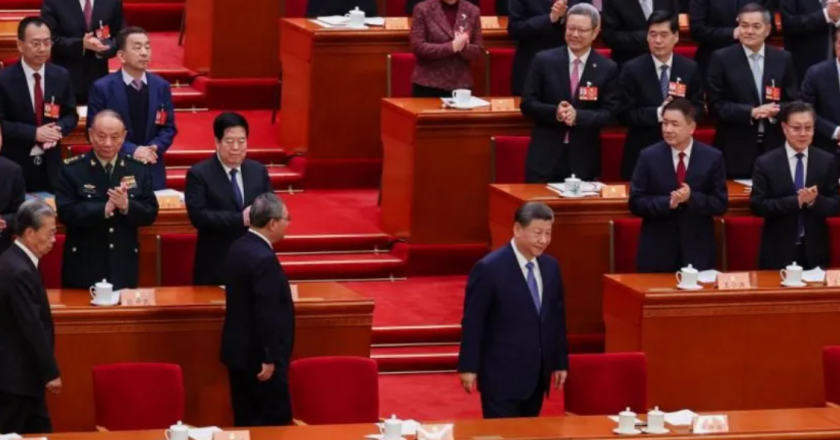
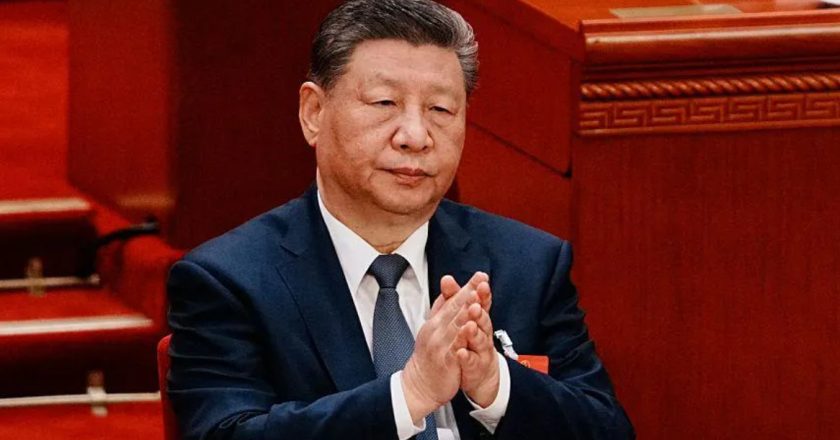
China's biggest political gathering - the National People's Congress or NPC - has come to an end. Its extensive authority includes making laws, amending the constitution and approving state budgets. But it effectively functions as a rubber-stamp parliament, approving decisions made behind closed doors by the top echelons of the Chinese Communist Party. Still, the annual meetings of the NPC and the Chinese People's Political Consultative Conference (CPPCC) - also known as the "two sessions" - are watched closely as they signal the priorities of the world's second-largest economy. Our correspondents give us their biggest takeaways. China wants to show it is a beacon of stability By Laura Bicker, China correspondent China's push to be the world's leading superpower depe...
What to know about the ‘two sessions’, China’s biggest political meeting

What to know about the ‘two sessions’, China’s biggest political meeting

The stage is set for China's biggest political gathering - carefully choreographed annual meetings of the political advisory body and the rubber-stamp national legislature. The "two sessions", which started on Wednesday and typically run for one to two weeks, signal the priorities of the world's second-largest economy. Observers will be watching if China aims for ambitious growth targets despite struggling to lift domestic consumption, and will pore over its new Five Year Plan to understand Xi Jinping's roadmap for the country. Looming over the event are the recent purges of high-level military officials who have been dismissed as part of Xi's long-running anti-corruption campaign. Here's what you need to know about the gathering. What are the 'two sessions'? The ter...
What Americans think of the war in Iran

What Americans think of the war in Iran

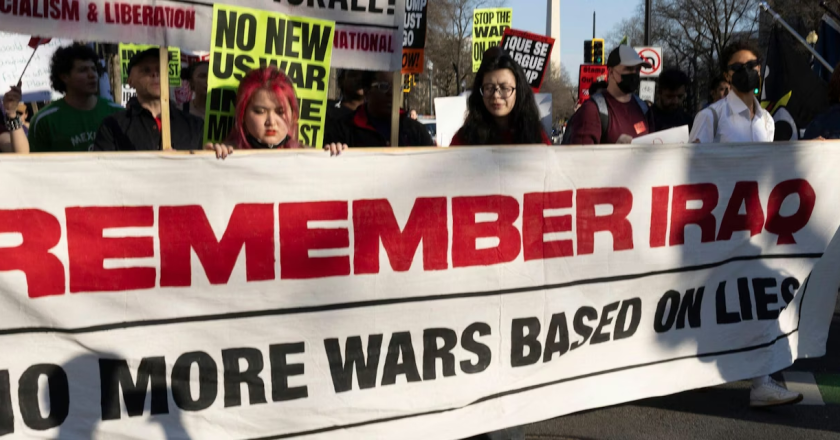
The American people are bitterly divided over the conflict in Iran. The US president, Donald Trump, won office in 2024 after campaigning on a message of “no new wars”. So the conflict that began with airstrikes conducted with the Israeli military in the early hours of February 28, and which has quickly spread into the rest of the region, has polarised opinion across the country. An Economist/YouGov poll completed on March 2 provides early information about what Americans think of the war so far. The poll asked the following question: “Would you support or oppose the US using military force to overthrow the government of Iran?” There is a great deal of confusion about what the objectives of the war are, since the messaging from Trump, and his senior officials, has veere
China in the crossfire: Calculated moves amid the US-Iran showdown

China in the crossfire: Calculated moves amid the US-Iran showdown

The launch of large-scale US and Israeli strikes against Iran starting on February 28 — framed by President Donald Trump’s objectives of degrading Tehran’s military capabilities and potentially precipitating regime change — places Beijing in a strategically uncomfortable position. This campaign is the most significant US military operation since the Iraq War, unfolding across a region central to China’s energy security and commercial ambitions. China formally opposes regime change and externally engineered political transitions as a matter of doctrine, viewing them as contrary to principles it treats as protective of both Iranian sovereignty and its own domestic and territorial sensitivities. That doctrinal stance shaped Beijing’s early response, as it joined Moscow in&nb
The Eerily Familiar Game Behind China’s Silence On Iran

The Eerily Familiar Game Behind China’s Silence On Iran

What looks like a setback for Beijing in West Asia might actually be more leverage - a chance to build long-term capital without firing a single shot. The present crisis in Iran - set in motion by the joint US-Israeli strikes of February 28 that killed Supreme Leader Ali Khamenei and decapitated key nodes of Iran's leadership - marks yet another inflexion point in the churn of West Asian geopolitics. For China, this is undeniably a setback. But it is neither terminal nor transformative in the way some might prematurely suggest. Rather, it is a reminder of the structural limits of Beijing's ambitions in a region still profoundly shaped by American hard power. Beijing's reaction has been swift, if predictable. Denouncing the strikes as "unacceptable" and violative of internation...
Beijing Doesn’t Think Like Washington—and the Iran Conflict Shows Why

Beijing Doesn’t Think Like Washington—and the Iran Conflict Shows Why

Arguing that Chinese policy is hung on alliances—with imputations of obligation—misses the point.  In the wake of the coordinated U.S. and Israeli attacks on Iran and the U.S. seizure of Nicolás Maduro from Caracas, many in the American strategic class express surprise that Beijing does not ride to the rescue of its strategic partners. A former U.S. ambassador to China (and my former boss) Nicholas Burns puts this point especially bluntly: “China,” he concludes, “is proving to be a feckless friend for its authoritarian allies.” But China’s standoffish posture is not, in fact, a surprise. Simply put, avoiding binding security commitments to peripheral third countries is not a sign of weakness but is by strategic design. It is patently obvious that regimes such as Aya
Merz heads to Beijing under pressure to toughen tone on China

Merz heads to Beijing under pressure to toughen tone on China

German Chancellor Friedrich Merz is arriving in Beijing early on Wednesday to meet his Chinese counterpart Xi Jinping, marking his first visit to China since taking office in 2025. Before taking off, Merz stressed the need for fair trade, but also said that China “has risen to the ranks of the great powers, our China policy must take this into account” and that “Beijing’s voice is also heard in Moscow.” China is Germany’s top trading partner. Yet diplomats in Berlin hope Merz will strike a firmer tone, in line with the government’s China strategy, which aims to reduce economic dependence on the world’s second-largest economy. “Chancellor Merz must not sugarcoat anything in Beijing”, Boris Mijatovic, member of the Bundestag’s committee on foreign affairs, told Eura
How Europe can resolve its Trump-China dilemma

How Europe can resolve its Trump-China dilemma

Europe faces a dilemma in its engagement with China. While closer relations with Beijing could reduce European dependence on the US, it would also risk provoking a harsh response from Washington. Gesine Weber and Zeno Leoni argue that Europe can overcome this challenge if it embraces its role as a middle power. German Chancellor Friedrich Merz is making an official visit to China on 25–26 February. His trip follows similar visits by French President Emmanuel Macron in December and Canada’s Prime Minister Mark Carney and UK Prime Minister Keir Starmer in January. These visits come at a complex time for relations between China and Europe. China’s position on the Russia-Ukraine war and the impact of its trade practices
Pakistan’s Tightrope: Between America’s Embrace and China’s Shadow

Pakistan’s Tightrope: Between America’s Embrace and China’s Shadow

After the skirmish between India and Pakistan in May 2025, Pakistan became America’s new favorite ally — a strategic reset that came as a bolt out of the blue for many. With Pakistan basking in the glory of its military feat, a diplomatic spectacle unfolded, with US President Donald Trump and Pakistan Prime Minister Shehbaz Sharif as costars, showering each other with effusive praise. From lauding Trump’s “peacemaker” role to floating a Nobel Peace Prize nomination and now jumping on the bandwagon of Trump’s adventurism — the “Board of Peace” — Pakistan has delivered masterful diplomacy, which, although glaringly obsequious, remains well reciprocated. A strategic windfall for Islamabad As Islamabad enjoys the perks of this upswing, the diplomatic fanf
×