Business

Migrant workers and Covid limbo

Migrant workers and Covid limbo

Migrant workers and Covid limbo Among the most vulnerable groups affected by the Covid-19 pandemic, Asean's migrant workers find themselves living in limbo. Losing jobs, being stranded and lacking access to health care and essential services, migrant workers are struggling to survive, especially as the spread of the Delta variant is prompting new restrictions on a global scale. According to a policy brief recently released by the International Labour Organization (ILO), the Asean region is projected to see 9.3 million fewer workers in employment in 2021 than expected in the absence of the pandemic, compared to 10.6 million fewer workers in 2020. This year could also see working-hour losses of 7.4% while labour income losses sre affecting all countries in Asean. The Philippines has repo...
Energy crossroads

Energy crossroads

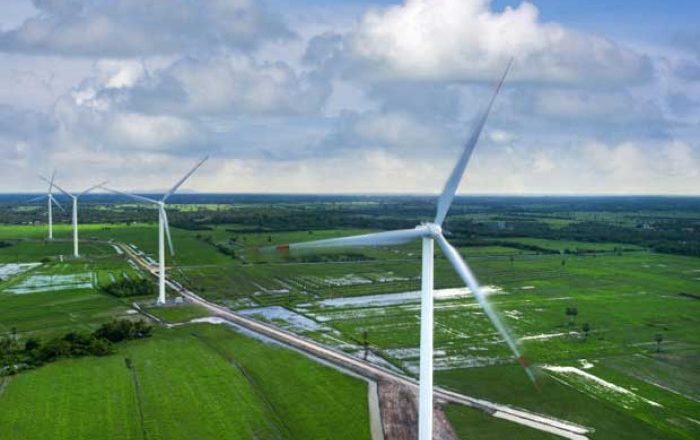
Asian countries are taking big steps toward green goals, but huge energy appetites will be fed mainly by fossil fuels in the near term. A solar plant in Tay Ninh, Vietnam is among the many renewable power projects developed by Thailand-based B.Grimm Power Plc. Supplied/B.Grimm Power The coronavirus pandemic has taken a huge toll on nearly all forms of economic activity and the energy sector is no exception. Mobility restrictions and lockdowns have put energy resilience to the test as demand plunges and many projects come to a standstill. The oil and gas sectors were hit particularly hard, with the price of oil nosediving, stalling exploration and hurting production. Prices have since recovered but new challenges are emerging. Most notably, exploration firms are questioning the longer-te...
Philippines eases virus lockdown in capital to spur economy

Philippines eases virus lockdown in capital to spur economy

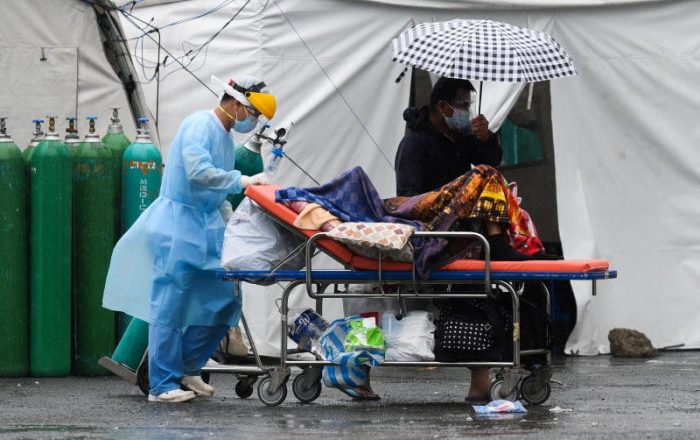
Philippines eases virus lockdown in capital to spur economy FILE PHOTO: A health worker wearing personal protective equipment (PPE) as protection against the coronarivus disease (COVID-19) transports a suspected Covid-19 patient, at Sta. Ana Hospital, in Manila, Philippines, Sept 8, 2021. (Reuters) The Philippines will ease coronavirus restrictions in the capital Manila despite record infection numbers, officials said Tuesday, as it seeks to spur economic activity. Restaurants, churches and beauty salons in the national capital region will open at lower capacities from Thursday to get tens of thousands more people back to work. "We should strive for total health and this can only be realised by carefully balancing our Covid-19 response by considering both the health of our people and t...
An assessment on China’s intentions to join the CPTPP

An assessment on China’s intentions to join the CPTPP

China’s decision to join the CPTPP was pre-planned. Since it coincided with the announcement of AUKUS it became strategic as well. China has much to gain both economically, politically, and domestically by joining the CPTPP. China has chosen an appropriate time to join the format as currently the 20 group of obligations under the CPTPP are suspended. This suspension is stopping the format to become a FTA 2.0, which China does not find suitable for itself due to its own track record such as of giving subsidies to State-owned enterprises and intellectual property rights. If China joins at this juncture, it will be able to stall these 20 groups of obligations and mould the format to make it a RCEP kind of a regional FTA. Through this format, China will also try and readjust regional supp
Xi Jinping’s Leadership Challenges for the CCP’s stability

Xi Jinping’s Leadership Challenges for the CCP’s stability

In his opinion Glenn Tiffert, a historian at the Hoover Institution at Stanford University brought forth Xi Jinping’s feared that the CCP might eventually disintegrate like Soviet Communists and “this seems to be a problem that he paid special attention to from the beginning.” Xi Jinping, therefore, wanted to avoid the path of destruction of the Communist Party of Soviet Union and this manifested in his tightening of his grip over the Party. In November 2019, the BBC Chinese website published an article stated that “China under Xi Jinping may embark on the old path of Brezhnev, former General Secretary of the CPSU.” It is believed that after Brezhnev came to power, Khrushchev’s reforms and liberalisation commitments ended, and the state’s centralised control was strengthened. This is s
Disease law set for change

Disease law set for change

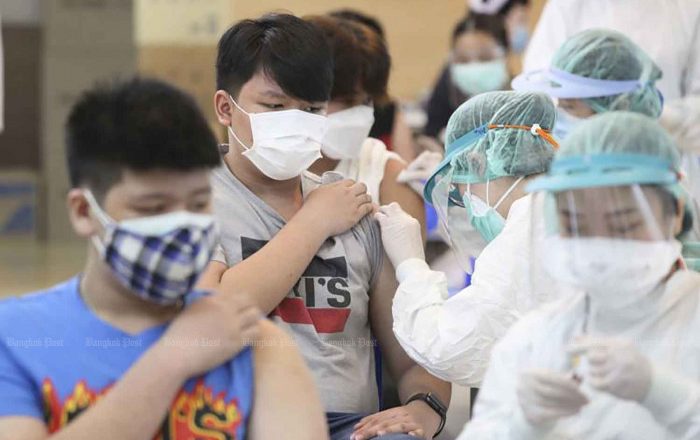
Teenagers are vaccinated against Covid-19 at Vachira Hospital in Bangkok on Tuesday. (Photo: Pattarapong Chatpattarasill) The cabinet has approved a draft amendment to the 2015 Communicable Disease Act, seen as a new mechanism to replace the emergency decree in the country's ongoing battle against Covid-19. The state of emergency, declared under the emergency decree to facilitate the government's outbreak containment efforts, is due to expire at the end of this month when the amended disease control law is expected to be enacted. The Centre for Covid-19 Situation Administration (CCSA), established under Section 7 of the emergency decree, will technically no longer exist if the state of emergency isn't renewed at the end of this month. However, in practice, the CCSA will continue to fun...
China, US unveil separate big steps to fight climate change

China, US unveil separate big steps to fight climate change

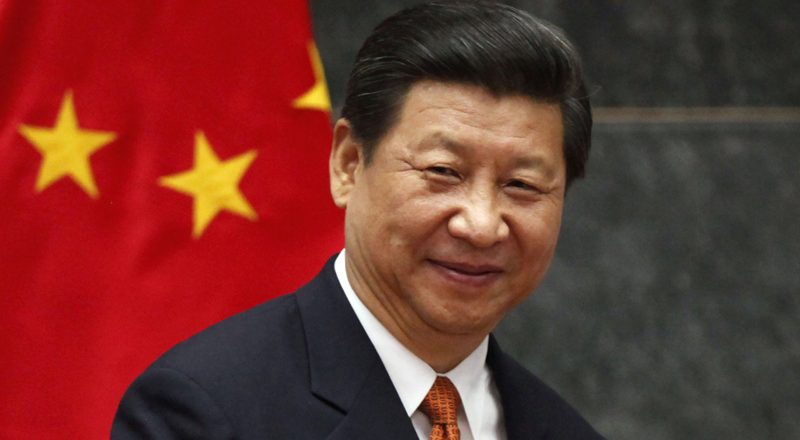
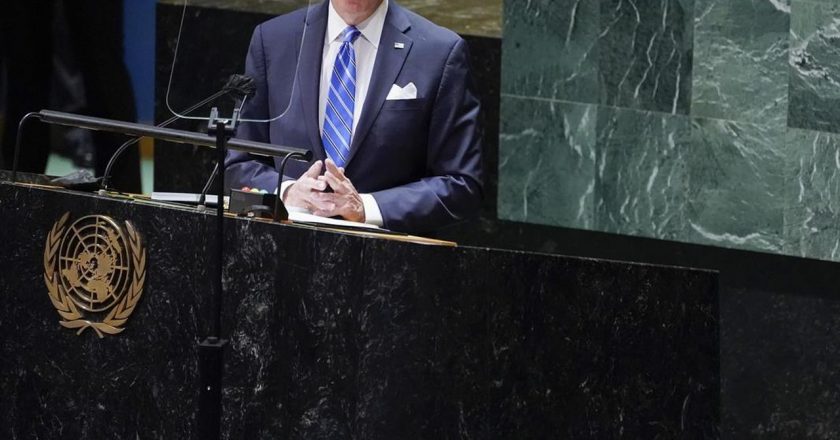
The two biggest economies and largest carbon polluters in the world announced separate financial attacks on climate change Tuesday. Chinese President Xi Jinping said his country will no longer fund coal-fired power plants abroad, surprising the world on climate for the second straight year at the U.N. General Assembly. That came hours after U.S. President Joe Biden announced a plan to double financial aid to poorer nations to $11.4 billion by 2024 so those countries could switch to cleaner energy and cope with global warming’s worsening impacts. That puts rich nations close to within reach of its long-promised but not realized goal of $100 billion a year in climate help for developing nations. “This is an absolutely seminal moment,” said Xinyue Ma, an expert on energy development finance
Mitsubishi invests in Laos wind farm project, biggest in SE Asia

Mitsubishi invests in Laos wind farm project, biggest in SE Asia

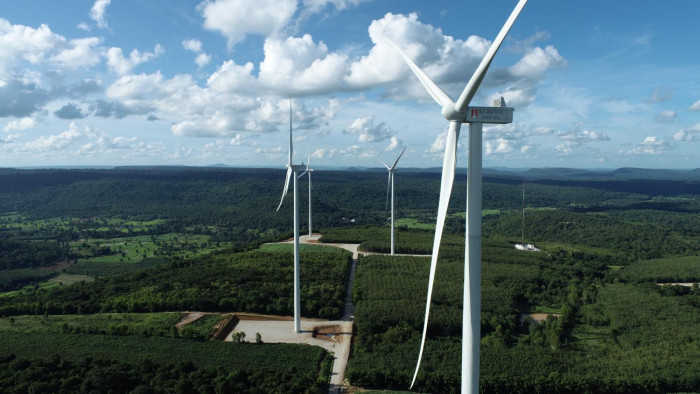
Mitsubishi invests in Laos wind farm project, biggest in SE Asia BCPG’s wind power facilities in Nakhon Si Thammarat. The company joins other companies in developing a wind farm in southern Laos. (BCPG photo) Japanese trading house Mitsubishi Corp has invested in a massive wind power plant project in Laos to deliver electricity to Vietnam, in what would be the biggest onshore wind farm in Southeast Asia. Mitsubishi said in a recent press release that the 600-megawatt wind power plant in Sekong and Attapeu provinces in southern Laos, a first for the country, will be developed by Hong Kong-based Impact Energy Asia Development Ltd, or IE, from next year, with operations planned to start in 2025. The onshore wind farm project, also described as the "first cross-border electricity interchan
China misrepresenting the data

China misrepresenting the data

New Delhi: According to the Doing Business Project, which began in 2002, the regulations that apply to small and medium-sized businesses are evaluated over the course of their entire life cycle. Researchers collected data on the effectiveness of business regulations in 190 different economies, selected cities at subnational and national levels, as part of the doing business project. Several inconsistencies have been discovered with regards to data changes in the doing business 2018 and doing business 2020 reports, which were released in October 2017 and April 2019, respectively. A statement from the World Bank said the data changes were not in line with its business methodology. In addition, it stated that "we have asked the World Bank Group's independent Internal Audit function to con...
China’s state media tries to reassure investors over crackdown

China’s state media tries to reassure investors over crackdown

China's state media tries to reassure investors over crackdown China has cracked down on a range of sectors as part of a drive to tighten its grip on the economy, while Xi Jinping has set his sights on the country's uber-rich, calling for 'common prosperity'. BEIJING: China's recent clampdowns on a range of industries including tech firms and the education sector will not detract from its goal of opening up the economy, state media said Wednesday, as Beijing rushes to reassure rattled investors. Sweeping regulatory changes over the past months have targeted everything from monopolistic behaviour to data security, rattling share prices and wiping billions off companies' valuations. Authorities have ordered some of China's biggest tech firms to stop "disorderly expansion", scuppered the ...
×