China

Shoigu backs China’s position on Taiwan, says Russia watching Japan’s ‘militarization’

Shoigu backs China’s position on Taiwan, says Russia watching Japan’s ‘militarization’

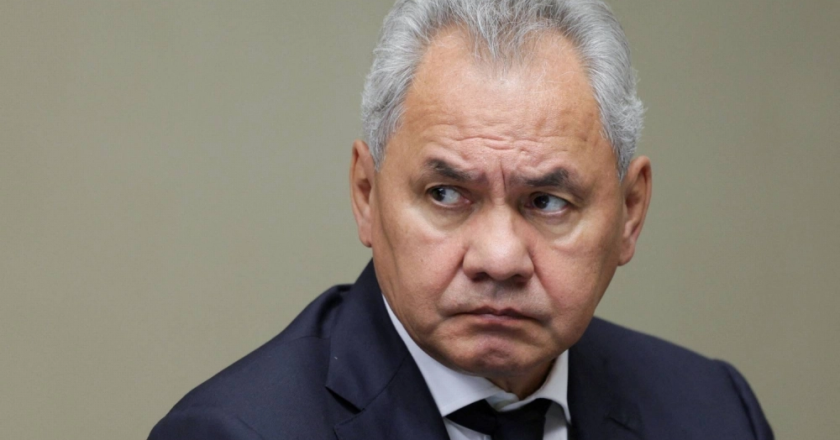
Russian Security Council Secretary Sergei Shoigu told Chinese Foreign Minister Wang Yi that ​Moscow continues to support Beijing over Taiwan, as Russia keeps a close eye on Japan's "accelerated militarization," the TASS state news agency ‍reported. China and Russia have forged close ties in ‍recent years and declared a "no limits" strategic partnership days before Russian President Vladimir Putin sent tens of thousands of troops into Ukraine in February 2022. China views democratically governed Taiwan as its own territory and has not renounced using force to ‍bring it under its control. Beijing has offered Taiwan a "one country, two systems" model, similar to Hong Kong, though no major political party in Taiwan supports this. Russia ‌has repeatedly said it opposes Taiwan's in
The Breakdown in Japan-China Relations

The Breakdown in Japan-China Relations

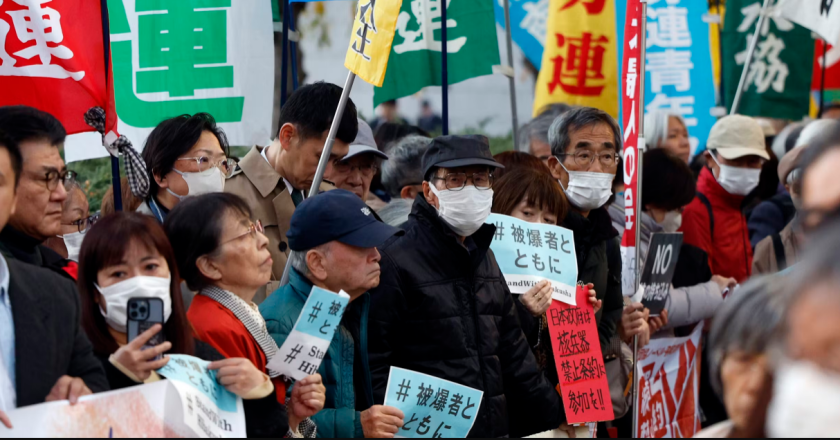
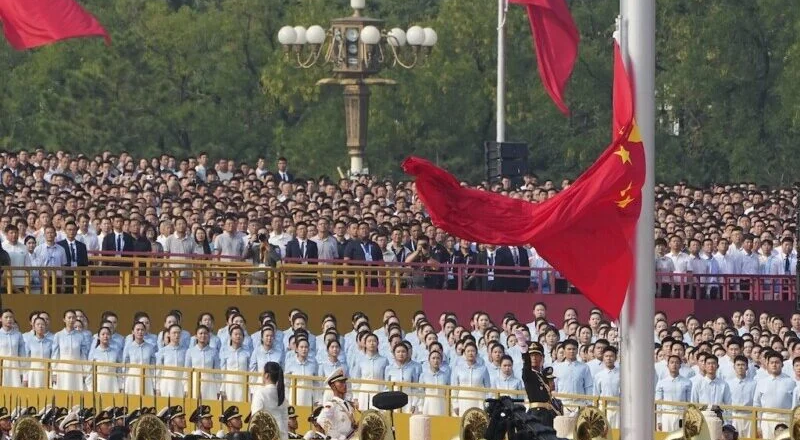
The China-Japan crisis stems from the structural tension between China's ideological framework, which centers Taiwan in regime legitimacy and national identity, and Japan's strategic perception that directly links the Taiwan scenario to national security. Tensions between Japan and China escalated sharply in November 2025, plunging the two countries into one of the most serious diplomatic crises in recent years. The crisis was triggered when Japan’s new prime minister, Sanae Takaiçi, stated that a potential Chinese attack on Taiwan could threaten Japan’s survival and provoke a military response. Beijing responded with unusual severity by imposing flight and tourism restrictions, banning imports of Japanese seafood, canceling cultural exchanges, and increasing military activity arou
China’s AI ambitions meet the politics of global supply chains

China’s AI ambitions meet the politics of global supply chains

The US military operation against the Venezuelan President Nicolás Maduro has exacerbated the already strained US relationship with Latin America, with far-reaching implications beyond the region. The episode unfolded in the context of China’s increasing involvement in Venezuela, underscoring the extent to which Latin America’s resource diplomacy has been caught up in the great power competition. China’s stance towards this crisis has been illustrative of its typical foreign policy ‘duality,’ featuring a strong rhetorical stance towards US unilateral intervention with cautious non-actions. This measured stance enables China to establish itself as a defender of sovereignty and the international norms, as well as keep minimal risks in the game of influence in a region where US influe
U.S. Approves Nvidia AI Chip Exports to China

U.S. Approves Nvidia AI Chip Exports to China

The U.S. has approved the export of Nvidia’s H200 AI chips to China. New regulations require third-party testing to confirm chip capabilities before shipment. Nvidia must ensure ample supply in the U.S., and Chinese buyers are required to implement 'sufficient security procedures.' On Tuesday, the Trump administration approved the export of Nvidia's H200, the second most powerful AI chip, to China. This move marks a significant step for tech exports between the two countries. As per the regulations, these AI chips will undergo third-party testing to validate their technical capabilities before being shipped. This ensures that the technology meets specific standards and provides a layer of oversight. Nvidia is obligated to confirm that there is an adequate supply of these chip
China’s Global Security Initiative in South Asia

China’s Global Security Initiative in South Asia

South Asia’s strategic location, fragmented politics, and regional rivalries make it an ideal testing ground for the GSI’s flexible, norm-driven approach. In 2025, South Asian governments confronted mixed signals about China’s Global Security Initiative (GSI). While Beijing promoted the initiative at major regional forums, Nepal stopped short of endorsing it, reflecting broader skepticism among smaller states wary of Chinese security outreach. Such reticence points to ongoing debate over the GSI’s meaning and utility in a region marked by strategic reordering and intensifying great-power rivalry. Launched by President Xi Jinping in April 2022, the GSI was presented as a response to a destabilizing, alliance-driven international security order. Framed around princi
From black jails to Capitol Hill: Survivor warns of Beijing’s expanding assault on US religious freedom

From black jails to Capitol Hill: Survivor warns of Beijing’s expanding assault on US religious freedom

On the eve of her wedding, Zhang Wanxia’s life took a dramatic turn. Her fiancé, Yin Xinxiao, was suddenly detained and interrogated by police for hours—his only “crime” was practising Falun Gong, a spiritual discipline rooted in traditional Chinese meditation and moral teachings.  The incident foreshadowed what lay ahead for Zhang: years of state persecution, torture, and forced labour under the Chinese Communist Party (CCP). The crackdown on Falun Gong officially began on July 20, 1999, when Chinese authorities banned the practice nationwide.  Over the past 26 years, human rights groups, independent investigators, and international media have documented systematic repression, including arbitrary detention, torture, forced labour, and ideological “reeducation.” Zha
Will Japan build nuclear weapons? Why China’s concerns are unfounded, for now

Will Japan build nuclear weapons? Why China’s concerns are unfounded, for now

Tensions are growing in east Asia. The threat of a Chinese attack on Taiwan persists and, in recent weeks, North Korea has been testing its long-range missile capabilities. Russia’s reorientation of ties from Europe towards Asia is also accelerating and the America First rhetoric of Donald Trump is raising questions about the commitment of the US president to his country’s east Asian allies. In navigating this context, Japan has returned to one of its recurring national debates: whether it should possess nuclear weapons. This debate was reignited in December following comments from an unnamed government security adviser that they believe Japan should have nuclear weapons given the severity of the surrounding security environment. The Japanese government swiftly reaffirmed its co
Russia, China and Iran begin naval drills near South Africa

Russia, China and Iran begin naval drills near South Africa

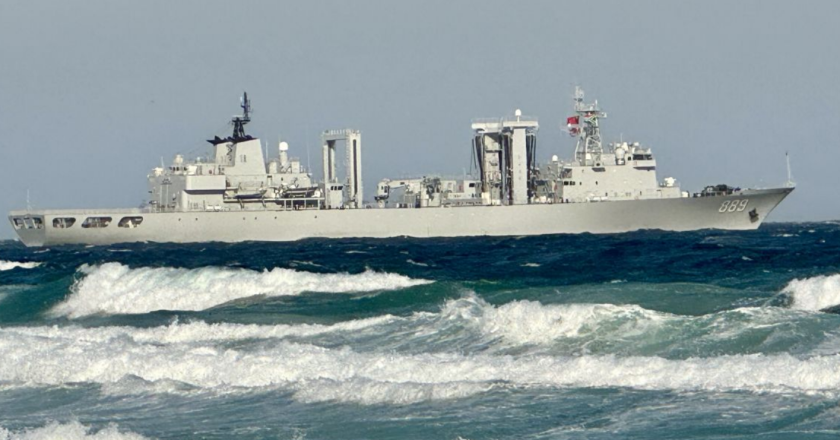
China, Russia and Iran began a week of joint naval exercises in South Africa's waters on Saturday in what the host country described as a BRICS Plus operation to "ensure the safety of shipping and maritime economic activities." BRICS Plus is an expansion of a geopolitical bloc originally comprising Brazil, Russia, India, China and South Africa – and seen by members as a counterweight to U.S. and Western economic dominance – to include six other countries.  Though South Africa routinely carries out naval exercises with China and Russia, it comes at a time of heightened tensions between U.S. President Donald Trump's administration and several BRICS Plus countries, including China, Iran, South Africa and Brazil.  The expanded BRICS group also includes Egypt, Indon
China’s Xi to host South Korea’s Lee next week amid Japan tensions

China’s Xi to host South Korea’s Lee next week amid Japan tensions

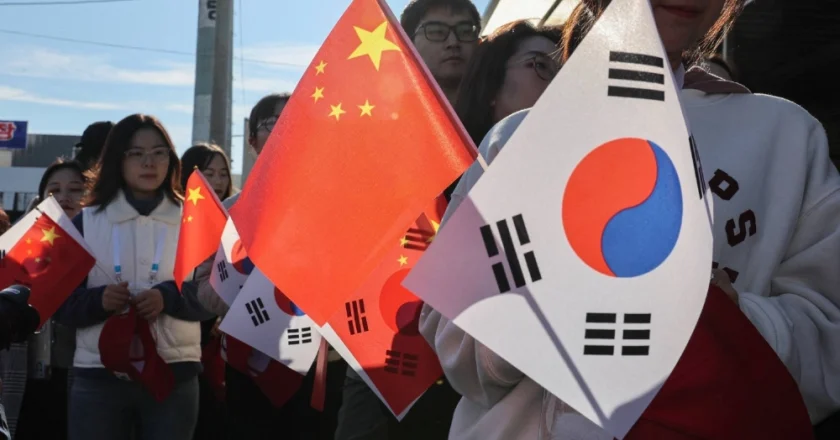
Chinese President Xi Jinping will host South Korean President Lee Jae Myung on a state visit starting on Sunday, signaling Beijing's intent to strengthen ties with Seoul amid strained relations with Japan over Taiwan. The visit marks the second meeting between Xi and Lee in just two months, an unusually short interval that signals China's keen interest in reinforcing ties with Seoul and boosting economic collaboration and tourism, analysts say. Relations between China and Japan are at their chilliest point in years after Prime Minister Sanae Takaichi suggested in November that a hypothetical Chinese attack on Taiwan could trigger a military ​response from Tokyo. Xi's invitation to Lee for a state visit is a calculated move aimed at deepening bilateral relations especially bef
Historical Revisionism As State Policy: China’s Manufactured Past And Its Strategic Uses

Historical Revisionism As State Policy: China’s Manufactured Past And Its Strategic Uses

China has increasingly treated history not as a field of inquiry but as an instrument of state power. Over the past decade, and with particular intensity since 2023, Beijing has accelerated a deliberate effort to reshape historical narratives in ways that align the past with present political and strategic objectives. This is not an abstract debate about memory or national pride. It is a systematic policy that retrofits selective history to legitimize territorial claims, suppress dissent, and narrow the scope of diplomatic compromise. In this framework, history becomes less a record of what happened and more a justification for what the state seeks to do next. At the core of this approach lies the assertion that China’s contemporary borders and ambitions are the natural culmination
×