
Last month at Tokyo’s Ueno Zoo, after receiving thousands of tearful goodbyes from Japanese fans, Xiao Xiao and Lei Lei were put on a plane bound for China – the latest symbols of the deteriorating relationship between China and Japan.
The two giant Chinese pandas had to return home after Beijing announced it was taking them back, leaving Japan without any Chinese pandas for the first time in decades.
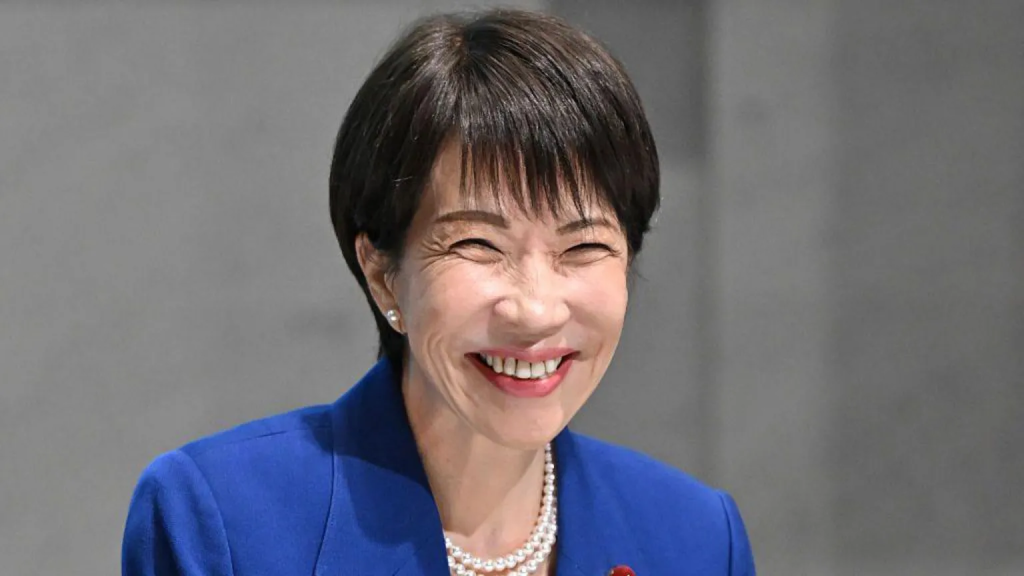
Since Japan’s Prime Minister Sanae Takaichi made comments that have plunged ties with China to their lowest level in years, Beijing has been piling on the pressure in a wide range of ways – sending warships, throttling rare earth exports, curbing Chinese tourism, cancelling concerts and even reclaiming its pandas.
As Takaichi begins a new term as PM after winning a historically strong public mandate from a recent snap election, analysts warn that both sides will find it difficult to de-escalate – and the China-Japan relationship will not recover anytime soon.
The row began in November, when Takaichi appeared to suggest that Japan would activate its self-defence force in the event of an attack on Taiwan.
China claims self-governed Taiwan as its own and has not ruled out the use of force to “reunify” with it one day. The island counts the US as its key ally, and Washington has pledged to help Taiwan defend itself.
The worry has long been that any attack on Taiwan could result in a direct military conflict between the US and China, and then widen to include other US allies in the region such as Japan and the Philippines.
The issue of Taiwan is an absolute red line for China, which reacts furiously to any comment perceived as “outside interference” and insists that it is a question of sovereignty that only China can decide for itself.
Almost immediately after Takaichi’s remarks, Beijing responded with a flurry of condemnation and demanded a retraction.
Observers have noted that Takaichi’s comments were in line with the government’s position and what other Japanese leaders have said in the past.
But the difference is that it was the first time a sitting Japanese prime minister had voiced such views.
For her part, Takaichi refused to apologise or retract her remarks, a stance that analysts say may likely be vindicated by the strong mandate she has won.
But she said she would be more careful about commenting on specific scenarios, and her government has sent senior diplomats to meet their Chinese counterparts.
This, however, has done little to allay Chinese anger.
‘Greyzone’ pressure
Faced with Takaichi’s steady refusal to back down, China has piled on a steady stream of pressure.
While spats have flared up between the two countries in recent decades, fueled by historical animosity, this time it feels different, say analysts.
China has expanded its pressure on a much “wider range of fronts”, noted Robert Ward, the Japan chair for the think tank International Institute of Strategic Studies.
It is a diffuse, low-level pressure that is similar to the “greyzone warfare” it conducts on Taiwan, he said, where it’s aimed at “wearing down [the opponent] to normalise things that actually are not normal”.
Diplomatically, it has lodged complaints with the United Nations and postponed a trilateral summit with Japan and South Korea.
China has also tried to pull other parties into the fray and has called on the UK and France to side with it, while urging its allies Russia and North Korea to denounce Japan.
Over the weekend, Chinese foreign minister Wang Yi invoked Japan’s World War Two history of aggression while addressing Western leaders at the Munich Security Conference, and called Takaichi’s remarks a “very dangerous development”.
On the military front, Japan has claimed that China has sent drones, sailed warships past their islands and its fighter jets have “locked radars” on their planes. Japanese and Chinese coast guard ships have confronted one another near the disputed Senkaku/Diaoyu islands, while last week Japanese authorities seized a Chinese fishing vessel.
But it is clear that China also wants to hit Japan where it hurts – its economy.
Beijing has imposed restrictions on exports to Japan for dual-use technologies including rare earth elements and critical minerals, in what has been seen as a form of economic coercion.
It has also warned Chinese citizens to avoid Japan for their studies and holidays, and cancelled flight on 49 routes to Japan, leading to a drop in tourists and a slide in some stocks. Chinese nationals make up a quarter of all foreign tourists to Japan, according to official figures.
Even entertainment and culture is not off the hook.
Japanese music events have been cancelled in China, including one where a singer was rushed off stage mid-performance, while film distributors have postponed the release of several Japanese movies.
One of Japan’s most famous cultural exports, Pokemon, was also criticised over an event that was due to be held at the Yasukuni Shrine. The temple honours Japan’s war dead including some that China considers as war criminals. The event was eventually cancelled.
And on the social media front, Chinese online nationalists have launched attacks on Takaichi, including sharing AI-generated videos showing pop culture figure Ultraman and anime character Detective Conan fighting the prime minister.