
On February 28, 2026, the United States and Israel launched Operation Epic Fury, a sustained aerial campaign targeting Iranian nuclear facilities, military infrastructure, and regime leadership, which killed Supreme Leader Ali Khamenei. Tehran retaliated by launching missiles and drones at its Gulf neighbors, leading to a rupture in the diplomatic framework that had governed international engagement with its nuclear program for two decades, however imperfectly.
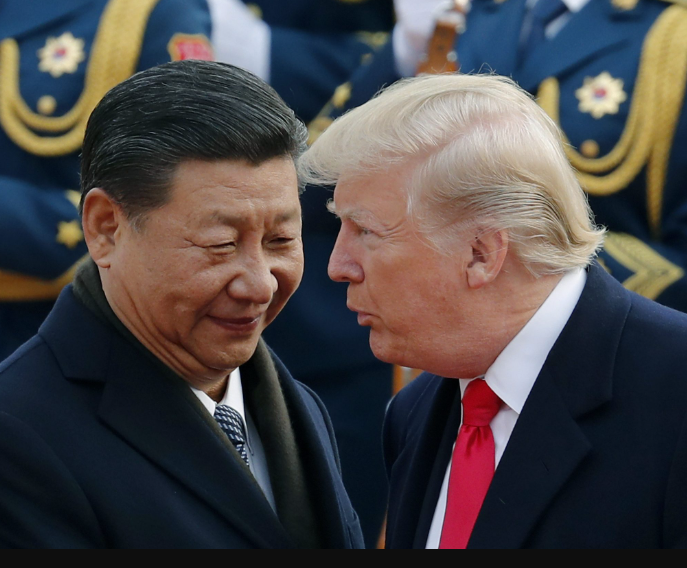
Amid a widening regional war, President Donald Trump and President Xi Jinping were scheduled to meet in Beijing at the end of March, though Trump asked to delay the visit amid ongoing developments in the Middle East. While Washington and Beijing remain rivals, they share certain overlapping interests on Iran, particularly preventing it from acquiring nuclear weapons. The two countries now face a narrow but critical opportunity to shape the trajectory of the war.
Washington and Beijing Converging Interests
Despite persistent tensions between Washington and Beijing, both powers have shared interests in how the war with Iran evolves. Both China and the United States oppose a nuclear-armed Iran, though they define the red line differently. Washington emphasizes strict limits on Tehran’s enrichment capabilities, viewing any progress toward a nuclear weapon as a direct threat to Israeli security and a potential trigger for a proliferation cascade across the Gulf. Beijing generally supports a more lenient policy toward Iran and has advocated for its right to some level of peaceful enrichment, but it also opposes a nuclear Iran, fearing that Iranian nuclear weapons would trigger a regional arms race and threaten the Non-Proliferation Treaty (NPT) framework. Iran has threatened to withdraw from the NPT in the past, following North Korea’s 2003 precedent, a move that would mark the treaty’s most consequential failure and one neither Washington nor Beijing has a credible plan to prevent.
Energy security is another point of convergence. Both powers depend on the uninterrupted flow of Gulf energy through the Strait of Hormuz, and the war has placed that shared interest in peril. Since the onset of the war, Iran has effectively closed the Strait, throttling a fifth of global oil supply. While Washington triggered the Strait’s closure, Trump is now actively seeking Chinese support, in addition to other nations, to help keep it open. China is the world’s largest oil importer. Although Beijing’s actual exposure to the Hormuz disruption is lower than Trump has claimed, the price shock has already complicated growth projections in an economy that recently lowered its 2026 target to its slowest pace since 1991.
Both Washington and Beijing have spent decades building economic and political relationships across the Gulf states. In retaliation to U.S. and Israeli strikes, Iran actively struck the Gulf Cooperation Council (GCC) states directly, targeting critical infrastructure, energy production, and even civilian areas. The United States and Israel accepted those strikes as an inevitable byproduct of their campaign. The physical damage has been more limited than feared, as early investments in air defense passed their first real combat test. However, the economic and perceptual damage to investor confidence and the credibility of external security guarantees is expected to outlast the war.
Finally, both Washington and Beijing would prefer a stable, predictable Iran. This convergence has always been the most aspirational. Iran has built its regional influence on a policy of perpetual conflict and an instability dividend, translating chaos into leverage across the region. Neither Washington nor Beijing has found a way to make Tehran abandon that model, but both stand to gain if Iran grows more predictable and stable.
Washington and Beijing Diverging Roles
Shared interests have not produced shared strategy. Washington and Beijing may agree on the contours of a desired end state; a non-nuclear, regionally contained Iran, but they diverge fundamentally on how to achieve it, leaving little to no coordinated action. This tension illustrates a central challenge of complex interdependence theory: even when two powers have a shared interest, differing beliefs about how to achieve it can produce friction as readily as it produces cooperation. The Iran case is a near-perfect illustration of that failure mode.
The sharpest divergence is over the use of force. China does not support military strikes against Iran’s nuclear facilities, and it views the current aerial bombardment campaign as precisely the type of unmanaged escalation it seeks to avoid. From Beijing’s perspective, a weakened but politically radicalized Iran is a worse outcome than the pre-war status quo because it produces a regime that lashes out regionally. This scenario generates the kind of chaotic spillover Beijing is structurally averse to managing. The United States has concluded that diplomacy alone cannot close Iran’s nuclear window and that sustained force is both necessary and justifiable. U.S. and Chinese positions are not just radically different; they reflect incompatible theories of how Iranian behavior changes. This difference creates a deadlock with few potential resolutions.
Sanctions represent a second divergence. Beijing does not believe that weaponizing fiscal and economic policy produces durable behavioral change. Chinese officials tend to view financial coercion as an illegitimate instrument of statecraft that undermines the global economic architecture that both it and Washington depend on. In line with that belief, Beijing has actively built alternative financial models, including the CIPS cross-border payments platform, that insulate partners like Iran from the full scope of American financial pressure. The result is that U.S. sanctions on Iran have lost salience over the past decade. Meanwhile, Iran has continued to develop its missile stockpile, arm regional proxies, and acquire necessary inputs through global networks that circumvent dollar-denominated finance. Washington has responded to diminishing sanctions returns and growing impatience with Iran by reaching for sharper instruments, including military action. Beijing has responded by deepening the workarounds.
The third divergence is the question of regime change. The Trump administration has sent competing signals about whether it seeks to end Iran’s nuclear program or end the Islamic Republic regime; this ambiguity has made every other diplomatic calculation more difficult. China is categorically opposed to regime change and outright condemned the killing of Ali Khamenei. However, Beijing did not run to embrace Iran’s new leader. One Chinese commentator noted that Beijing is wary of the new Supreme Leader, Mojtaba Khamenei, reasoning that he might continue to pursue a nuclear weapon, and in doing so, prolong the region’s security crisis. The new Supreme Leader’s first public statement signaled a doubling down on force rather than a strategic recalibration. This puts Beijing in an uncomfortable strategic position, unable to engage comfortably with the current Iranian leadership while also unwilling to endorse U.S. or Israeli use of force.
These divergences are not new. The difference now is that the war has stripped away the ambiguity that allowed both powers to manage them at a distance. Neither Washington nor Beijing has a framework for what comes next.
Limited Leverage, High Stakes
The cost of non-coordination on the Gulf has risen high enough that limited alignment now looks more attractive than avoiding it. Neither Washington nor Beijing will reconcile their theories of order, but both now pay a visible price for the lack of coordination. Trump has demanded Chinese help in keeping the Strait of Hormuz open, even though the closure results from a war China considers illegal. Trump’s claim that China receives ninety percent of its oil through the Strait is dramatically overstated, but it frames non-cooperation as free-riding. The Bessent–He Lifeng trade talks in Paris suggest both sides know cancellation is costly. The delay is leverage, not policy. It signals to Beijing that Washington may view the summit more as a bargaining tool than as a space for dialogue.
Beijing’s rational response is patience and silence. China is unlikely to send ships, pressure Tehran, or broker terms of a deal. Beijing would rather absorb short-term disruption than deliver Washington a win that validates the use of force or justifies regime change. Beijing’s official response exemplifies this careful balancing act: “As a sincere friend and strategic partner of Middle Eastern countries, China will continue to strengthen communication with relevant parties, including parties to the conflict, and play a constructive role for de-escalation and restoration of peace.”
China’s “constructive role” in the Gulf could involve deploying naval units for an anti-piracy mission from its base in Djibouti to escort ships through Hormuz, or it could mean more shuttle diplomacy. However, one thing it will certainly not involve is conceding strategic ground to Washington. The longer Beijing waits, the higher the potential political or economic costs it will face.
If the Trump-Xi summit eventually takes place, the only deliverable within reach of both leaders related to Iran is a joint statement recommitting to nuclear non-proliferation globally. The statement does not need to invoke the NPT, reference Iran, or propose enforcement. Both leaders sell a different story to a different audience from the same sentence. Trump takes home Chinese alignment against a nuclear-armed Iran, while Xi takes home responsible stakeholder status. This outcome is achievable regardless of whether Washington has chosen the off-ramp, but its significance depends on whether the United States pursues de-escalation or continues a hardline strategy.