
India need not emulate China’s political system to achieve a turnaround, but it can draw on the principles that made China’s progress possible
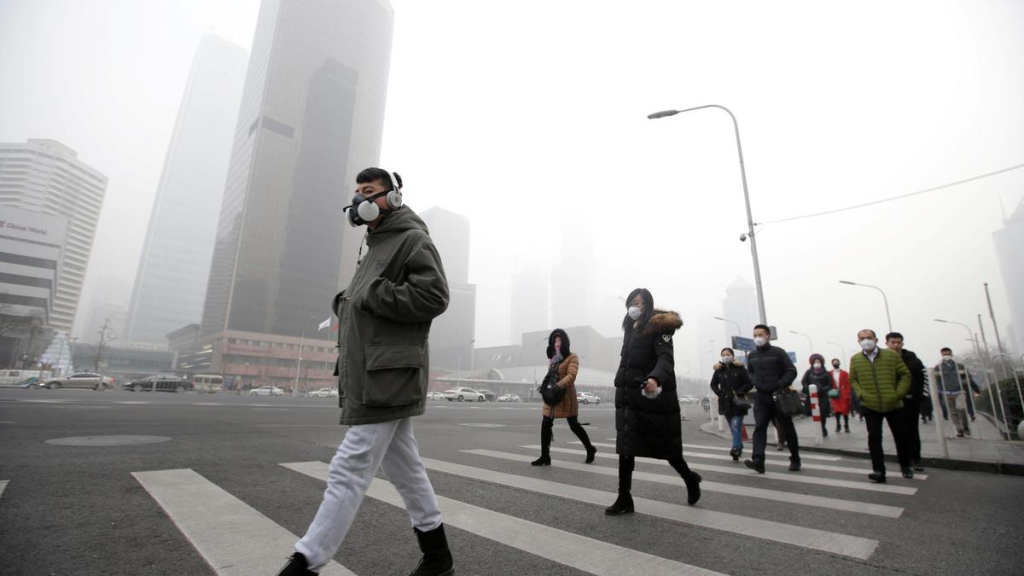
China and India have long grappled with severe air pollution. Yet their trajectories over the past decade have diverged sharply. Once a global symbol of smog, Beijing managed to cut its annual PM2.5 levels by more than 50% between 2013 and 2021, while Delhi continues to rank among the world’s most polluted cities. How is Beijing breathing easier?
Clean-air transformation
Beijing’s transformation was neither accidental nor incremental. It stemmed from a multifaceted approach enabled by two major policy drives: the Air Pollution Prevention and Control Action Plan and the Blue Sky Protection Campaign. These measures focussed on sweeping, top-down interventions across energy, transport, and industry. Beijing’s strategy was anchored in three features: coherent policy, strict enforcement, and regional coordination. The government expanded electric mobility, shut down or relocated hundreds of polluting industries, replaced thousands of coal-fired boilers with natural gas, imposed stringent China VI vehicular emission standards, built one of the world’s densest PM2.5 real-time air quality monitoring systems, and imposed substantial penalties for non-compliance. Most importantly, Beijing didn’t act alone. Its coordination with the neighbouring Tianjin-Hebei provinces through a unified ‘airshed’ strategy ensured regulation of transboundary air pollution. The turnaround was remarkable — PM2.5 levels dropped from the average 102 μg/m³ in 2013 to 31 μg/m³ in 2024.
India does not lack environmental laws, but from the shortage of coherence in implementing them. A strong statutory framework — the Air (Prevention and Control of Pollution) Act of 1981, the Environment Protection Act, 1986, and rules governing waste, construction, and emissions — exists alongside courts, tribunals, and pollution-control boards. Indirectly, various laws such as the Factories Act, 1948 and the Motor Vehicles Act, 1988 also shape air-quality outcomes. Yet regulatory fragmentation undermines their impact. Over the years, India has rolled out many initiatives: the National Clean Air Programme, the Graded Response Action Plan, odd-even rationing, construction bans, dust-control rules, crop-residue measures, work-from-home advisories, and Delhi’s Air Pollution Mitigation Plan 2025. The Centre has also established the Commission for Air Quality Management (CAQM). These interventions, however, are largely reactive and activated during pollution peaks rather than embedded in long-term planning; and agencies function in silos.
The core difference between the two approaches lies in governance, enforcement, and coordination. China’s Environmental Vertical Reform created a clear hierarchy for realising local governments’ environmental protection responsibilities. This top-down structure ensured uniform actions, strict enforcement, and rapid implementation. Delhi, however, operates within a fragmented governance system involving the Union government, the Delhi government, pollution control boards, and multiple municipal bodies. As a result, decision-making becomes slower, enforcement weaker, and accountability more diffused. Beijing’s regulatory agencies also possess sweeping authority and substantial resources. On the other hand, India’s pollution control boards remain chronically understaffed and underfunded. Also, Beijing modelled inter-provincial alignment through the airshed strategy whereas the CAQM’s directives to address stubble burning from adjoining States remain unauthoritative.
Smog refugee crisis: Delhi’s worsening air pollution drives young families out
China has made large sustained investments in clean energy, electric mobility, and industrial relocation. Delhi’s own industrial relocation attempts, such as the Bawana project, have faltered due to inadequate infrastructure and poor service delivery. Even ‘sustainable’ alternatives such as waste-to-energy plants have failed to meet air-quality norms. Delhi’s pollution load is further intensified by industrial and vehicular emissions, corrupted Pollution Under Control (PUC) checks, construction dust, open waste burning, and meteorological inversions that trap winter pollutants. Public transport expansion has lagged behind the city’s growth. Odd-even rationing has shown negligible long-term impact. Behavioural change too, has been slower in India.
What India can borrow
India need not emulate China’s political system to achieve a turnaround, but it can draw on the principles that made China’s progress possible. First, governance must shift from episodic responses to a long-term sustained, mission-oriented strategy and treat air pollution as a national public health emergency. Second, India must accelerate its transition to clean energy. Beijing’s move away from coal drove major PM2.5 reductions; Delhi similarly needs to expand and adopt energy-efficient standards suitable for all sectors. Third, transport reforms must be enforced, not merely announced. BS-VI norms require credible PUC systems, modern testing centres, a robust vehicle-scrappage policy, and congestion management. Expanding EV charging infrastructure, incentivising electric mobility, and dramatically strengthening public transport are essential. Fourth, industrial policy must shift from relocation on paper to functional industrial zones with full utilities, transport access, and real-time emissions monitoring. Finally, air pollution must be governed as a regional problem. A Beijing-Tianjin-Hebei style airshed model should guide Delhi-NCR.